
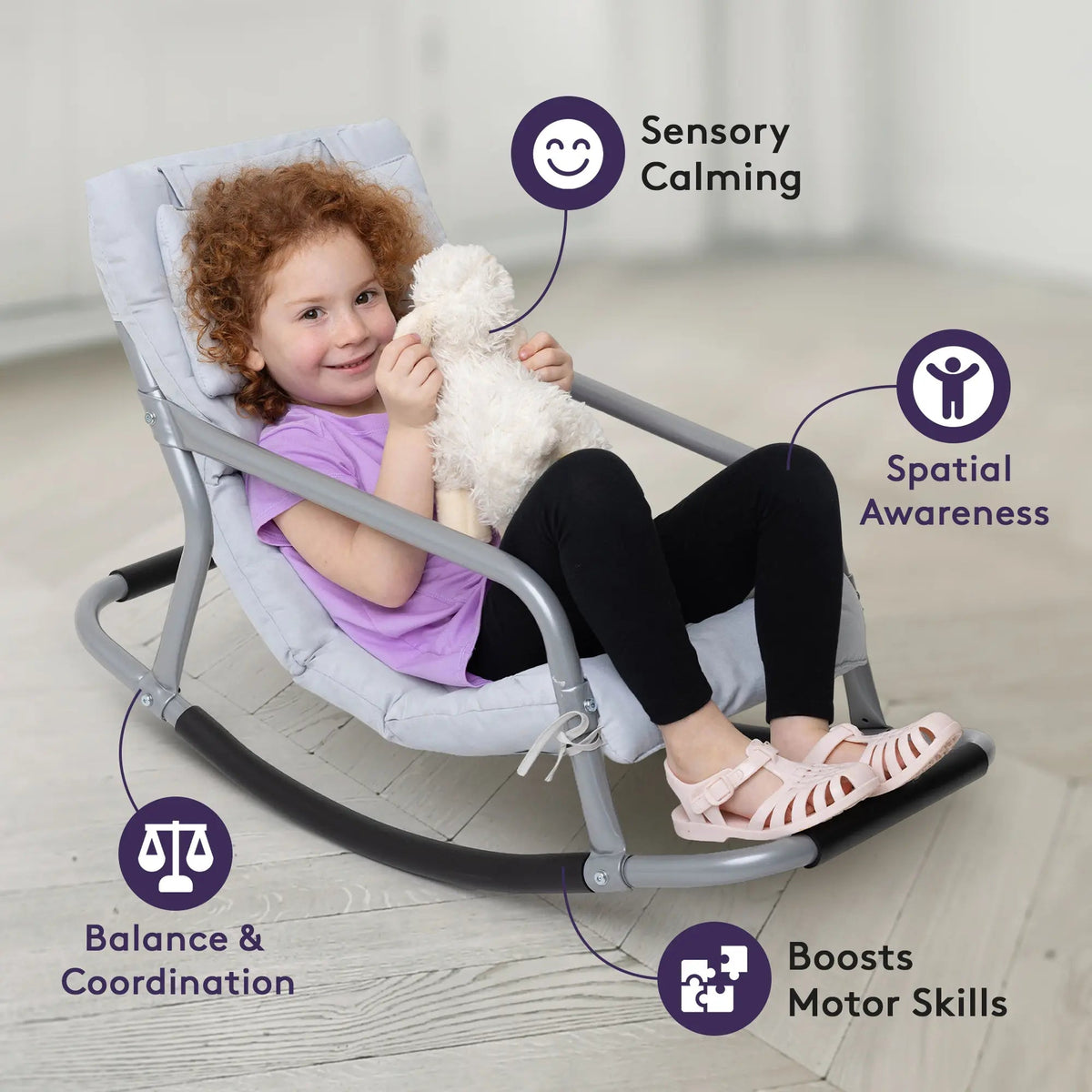
A gentle sway, a cozy seat, and a quiet corner of the world that’s all theirs — why a sensory rocking chair might be the most-used piece of furniture in your child’s room.
Every parent knows the loop: high energy, big feelings, then the crash.
Kids don’t always need more toys. Sometimes they just need a place to land.
That’s what a soft sensory rocking chair is for. Not a gadget, not a screen — just a warm, supportive seat that moves with them. Rock a little, read a little, breathe a little. For playtime chaos, storytime focus, or those in-between moments when a child just needs to reset, this is the kind of comfort that quietly does a lot of work.
Why Kids Are Drawn to Rocking
There’s a reason babies calm in someone’s arms and toddlers beg to “go again” on the porch rocker. The back-and-forth motion is built into how we self-soothe.
A kid-sized rocker takes that instinct and gives it a home:
- Predictable movement → nervous system slows down
- Soft boundaries → feels held, not exposed
- Their own space → “this chair is mine”
It’s not about therapy labels. It’s about giving a child a tool their body already understands.
More Than a Chair: 4 Ways It Fits Real Life
1. A Reading Nook That Actually Gets Used
Picture a corner with a small shelf, a blanket, and this rocker.
The gentle sway turns “sit and read” into something kids want to do. Pages turn slower, attention lasts longer, and storytime stops being a battle.
2. The Calm-Down Spot After Big Feelings
Meltdown incoming? Instead of “go to your room,” it’s: “go rock for a minute.”
The motion does the talking. No lectures needed — just rhythm, softness, and space.
3. Imaginative Play Basecamp
A rocker becomes a pirate ship, a rocket, a nest, a throne.
Because it moves, it feeds pretend play: galloping, sailing, floating through a story they’re making up in real time.
4. Quiet Transitions (Wake-Up, Bedtime, After School)
Mornings are rushed. Bedtimes are rocky. After school is overstimulating.
A few minutes in the rocker smooths the edges — no screen, no noise, just a slow swing back to center.
What Makes a Good Sensory Rocker?
When you’re choosing one, look past the cute shape:
- Soft but supportive — padded seat, gentle wrap, no hard edges
- Stable base — rocks smoothly, doesn’t tip easily
- Right size — feet can touch or dangle comfortably, not swallow them
- Easy to clean — kids + snacks + rocking = wipeable fabric
- Quiet mechanism — no squeak, no clunk, just calm motion
The best ones disappear into the room: not a “special needs device,” just a really nice chair a kid happens to love.
For Every Kind of Kid
- The busy body who can’t sit still for stories
- The sensitive soul who gets overwhelmed at birthday parties
- The early reader who wants a hideout with books
- The daydreamer who turns a chair into a time machine
- The tired toddler who fights sleep but melts into a sway
A sensory rocker doesn’t pick a “type.” It just meets them where they are.
Creating the Corner (Easy Setup)
You don’t need a full playroom reno. Three things:
- The rocker
- A small basket of books or a stuffed friend
- Soft light (lamp, string lights, or just a sunny window)
That’s it. You’ve built a reset button for your child’s day.
The Quiet Magic of Slowing Down
We buy kids climbing frames, tablets, light-up everything.
But often what they remember isn’t the loudest toy — it’s the chair where they read their first chapter book, rocked through a bad dream, or just watched the rain.
A sensory rocking chair is small furniture with a big job:
help them move, help them rest, help them feel safe in their own skin.
Share: